Propane Bus
Eco-friendly and cost-effective transportation.
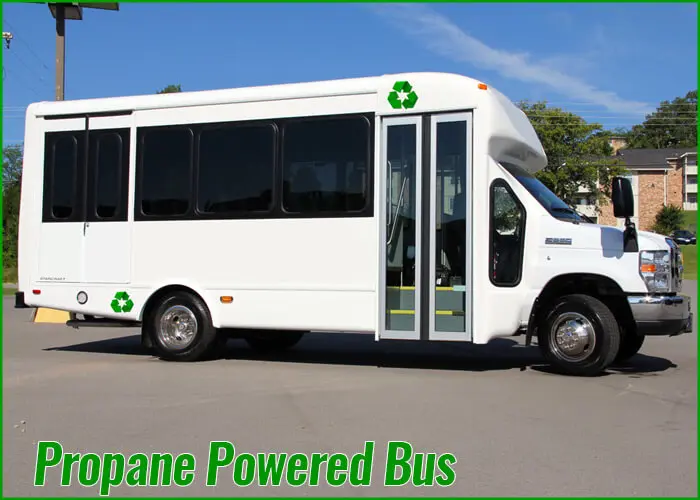
If You’re Thinking Alternative Fuel for Your Bus, US Bus Connect Has the Following Recommendation…
Go With a Dual Fuel Propane Bus!
Propane is currently the leading alternative fuel in the automotive industry, powering over 10 million vehicles across more than 38 countries. Its appeal is evident: propane offers a cost-effective, environmentally friendly, safe, and dependable fuel option. Additionally, more than 90% of the propane used in the United States is domestically produced, reducing reliance on foreign fuel sources.
What is a Dual Fuel Propane Conversion?
This option is available on most new buses from US Bus Connect. With the Dual Fuel Conversion, your bus can operate on either gasoline or propane. By adding a liquid propane injection system to your engine, you gain the flexibility to switch between fuels with a simple flip of a switch. You’ll appreciate the extensive selection of propane buses for sale in our inventory.
Since conversion costs to propane can fluctuate, consult your salesperson for the latest pricing information.
Many propane vehicle operators report a service life extended by 2 to 3 years, along with reduced maintenance needs. In the future, excise tax credits for fuel costs and conversion expenses may become available, helping to offset the initial investment of transitioning to this eco-friendly option.
- It’s Clean
- It’s Safe & Reliable
- It’s Cost-Effective
- It’s Plentiful
- It’s Produced in the USA
Propane exhaust produces 60% to 70% fewer smog-forming hydrocarbons compared to gasoline.
Propane has been a proven motor fuel for over 80 years and is the third most popular motor fuel globally, following gasoline and diesel. It operates at a relatively low pressure, and propane tanks are 20 times more puncture-resistant than gasoline or diesel tanks.
With an extended vehicle lifespan, lower maintenance costs, and potential tax credits for fuel and conversions, choosing propane can save you money while going green.
The United States boasts the world’s largest propane storage capacity, supported by an established network of pipelines, processing facilities, and refueling stations. Propane refueling equipment is also highly affordable.
Over 90% of the propane consumed in the US is domestically produced.
Frequently Asked Questions
What is Propane?
Propane, also known as Liquefied Petroleum Gas (LPG), is a by-product of refining natural gas and crude oil. It’s valued for its eco-friendly, clean-burning characteristics. With a higher octane rating (104 compared to premium gasoline’s 91-92), propane enables a higher compression ratio in the engine, improving efficiency and reducing certain exhaust emissions, such as carbon monoxide.
How Does Propane Affect Performance?
Propane vehicles offer the longest driving range among alternative fuels—over 250% greater than compressed natural gas, approximately 60% more than methanol, and 25% more than ethanol. Drivers of propane-powered vehicles report no noticeable performance differences compared to gasoline vehicles, with horsepower and torque capabilities closely matching those of gasoline engines.
Is Propane a Proven Motor Fuel?
Propane has been a reliable motor fuel since the 1920s, with over 10 million vehicles worldwide currently running on propane. In the US, numerous fleets—including Yellow Cabs in select cities, home delivery services, and school bus operations—have used propane for more than 20 years. Fleet owners praise propane for its environmental benefits, safety, performance, and cost savings.
How Does Propane Compare to CNG?
Compressed natural gas (CNG) shares many environmental benefits with propane and may become a viable alternative fuel in the future. However, CNG is currently less accessible, and the cost to install dispensing equipment—exceeding a million dollars—could slow its adoption. Converting an engine to CNG also costs more than twice as much as converting to propane. With its established infrastructure of pipelines, processing facilities, storage, and refueling stations, propane is a practical choice today.
Where Would I Refuel?
There are nearly 10,000 propane refueling stations across the country, with new locations opening daily. To locate a refueling site near you, visit www.afdc.energy.gov/stations. If you operate multiple propane buses, you might consider installing your own refueling equipment. US Bus Connect can recommend a trusted vendor to assist with installation.
How Does the Dual Fuel Capability Work?
With the Dual Fuel Conversion option, a liquid propane injection system is integrated into your engine, allowing you to alternate between gasoline and propane with a simple switch.
Speak With a US Bus Connect Sales Associate Today!